

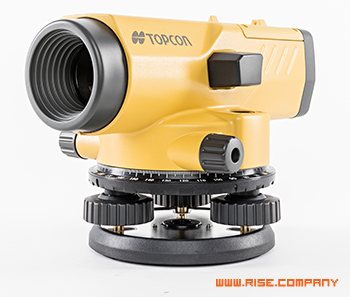
المعوض Compensator فى الميزان الاوتوماتيكى Automatic Level - صوت داخل الجهاز
stable automatic compensation
يحتوي على منظومة ميكانيكية داخلية ( Compensator ) تحافظ على أفقية خط النظر في جميع الإتجاهات وهو عبارة عن منشور زجاجى ( Pendulum prism ) يوضع بين الشئ وحامل الشعرات ومعلق داخل المنظار وهذا المنشور يمكنه تصحيح الفروقات الصغيرة فى ميل خط النظر بداخل المنظار وذلك بعد الضبط المبدئي لميزان التسوية الدائرى فقط بإستعمال مسامير التسوية الثلاثة ثم يضبط الميزان نفسه بعد ذلك من تلقاء نفسه -
توجد فى topcon و توجد فى Sokkia ولكن الصوت فى توبكون اعلى من سوكيا قليلا
Automatic levels make use of a compensator that ensures that the line of sight remains horizontal once the operator has roughly leveled the instrument (to within maybe 0.05 degree). The surveyor sets the instrument up quickly and doesn't have to relevel it carefully each time he sights on a rod on another point. It also reduces the effect of minor settling of the tripod to the actual amount of motion instead of leveraging the tilt over the sight distance. Three level screws are used to level the instrument.
+ إنشاء موضوع جديد
النتائج 1 إلى 1 من 1
-
20-04-2017, 10:38 #1Status
- Offline

- تاريخ التسجيل
- Nov 2009
- الدولة
- Egypt
- المشاركات
- 2,240
 عضو
عضو
- معدل تقييم المستوى
- 19
 المعوض Compensator فى الميزان الاوتوماتيكى Automatic Level - صوت حركة للـ Balance

 رد مع اقتباس
المواضيع المتشابهه
-
حل مشكلة Save failed with the following error: A first level menu item alias can't be
بواسطة Rise Company في المنتدى رايز للويب Rise Webمشاركات: 0آخر مشاركة: 26-02-2017, 23:36 -
ماي كلاود My Cloud اخذ نسخة احتياطية تلقائية automatic backup
بواسطة Rise Company في المنتدى قسم التخزين الشبكي NASمشاركات: 0آخر مشاركة: 22-12-2016, 17:07 -
تعليم قيادة السيارات الأوتوماتيك للمبتدئين driving automatic cars
بواسطة Rise Company في المنتدى قسم السياراتمشاركات: 0آخر مشاركة: 11-11-2015, 10:06 -
الاناشيد الاسلامية فى الميزان
بواسطة أم أحمد-sally في المنتدى قسم الدين الاسلامىمشاركات: 2آخر مشاركة: 03-03-2011, 21:34

المفضلات