


الفرق بين سلك الدش RG 6 vs RG 59 - سلك دش 96 شعرة vs سلك 128 شعرة vs سلك 163 شعرة
سلك دش / هوائي Coaxial Cable RG-59 or RG-6 لاقل فقد فى الاشارة
الكيبل المحوري Coaxial cable كواكس 96 شعرة, كواكس 128 شعرة, كواكس 160 شعرة
هي كيبلات كهربائية دائريه تستخدم لنقل الأشارت اللاسلكية ذات الترددات العاليه VHF,UHF غالبا وتستخدم حاليا في مجالات الميكرويف Microwaves , اغلب المستخدمين يعرفون هذا الكيبل في استخدمات وتركيبات التلفزيون فقط, بعض من استخدمات هذه الكيابل حاليا :
في انظمة التلفزيون والانتينا الخاصه بها واجهزه الأستقبال و ال LNB
في انظمة التلفزيون الكيبلي cable TV, CCTV
في انظمة الشبكات اللاسلكية Wi Fi
في انظمة ومعدات هوة اللاسلكي HAM
كانت تستخدم الكيبلات المحوريه في السابق في شبكات الحاسب من نوع ArcNet التي انتشرت ف عام 1980 واشهر الانواع التي استخدمت في الشبكات هي الموديل RG58 & RG8
*للاسف يعتقد الكثير من مهندسو الحاسب والخبراء ان الكيبلات المحوريه هي ماضي ولى ولكنني مازلت اعارضهم حتى هذه اللحظة فهذها الكيابل مازلت تستخدم بفعاليه عاليه ولها مستقبل مشرق باذن الله فهي تقريبا جاهز حاليا ل HDTV وتستخدم داخليا لنقل الملتميديا بانواعها
انواع الكيبلات المحورية Coaxial cable Types :
تنقسم الكيبلات المحوريه بشكل عام الى نوعين اثنين
النوع الاول : الكيبلات المحورية السميكه ThickNet
الموديل المعروف لهذا النوع من الكيابل
هو الموديل RG-11 وتمتاز هذه الكيبل بانها اقل خساره (كلما زاد سمك الكيبل قله نسبه الفقد )
ولكن سمك الكيبل يعني تكلفه اعلى ومساحه اكبر ووزن اكبر
النوع الثاني : الكيبلات المحورية النحيفة ThinNet
الموديل المعروف لهذا النوع من الكيابل
هو الموديل RG-58 ويمتاز بحجمه الصغير وسهوله التعامل معه ولكنه اعلى فقد من النواع
السابق (كلما قل القطر زاد الفقد)
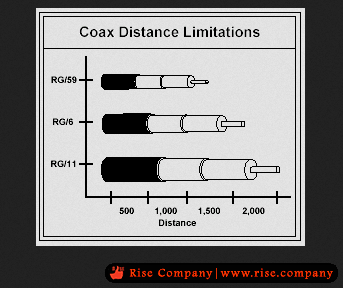
فى الوسط بينهم هو RG-6 , الممانعه في النوعين السابقين من الكيبلات المحوريه هو 75 اوم,
الصورة فى الاعلى المسافات بالقدم و التي توضح ان هناك اسلاك مخصصة للمسافات الاكبر
حيث كلما زادت المسافة كلما كان الفقد اعلى لذا يجب اختيار نوع السلك المناسب.
التركيب الداخلي للكيبلات المحوريه كالتالي :
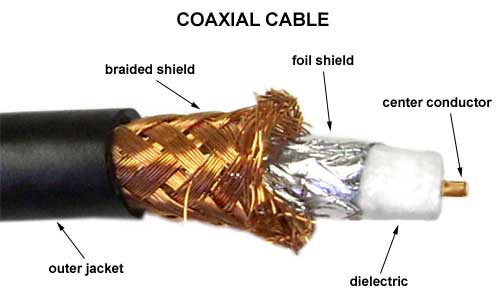
الكيبل المحوري في الغالب يتكون من
طبقه خارجيه تسمى ب Jacket وهي من ماده PVC
غلاف داخلي يلي الغالاف الخارجي يسمى Outer Shield
غلاف يلي الغلاف السابق (يتوفر في الانواع الأعلى جوده) Inner Shield
غلاف فليني (ماده الفلين) او قد يكون من البلاستك احيانا Foam Polyethylene
اما قلب الكيبل فهو من النحاس يمسى Core او قد يتوفر باسماء اخرى
تختلف طبقات الكيبل حسب جوده الكيبل ساستعرض بعض الانواع بدون الدخول في تفاصيلها
# الجوده : اي قله الفقد في الأشاره او في البينات على مسافات معينه
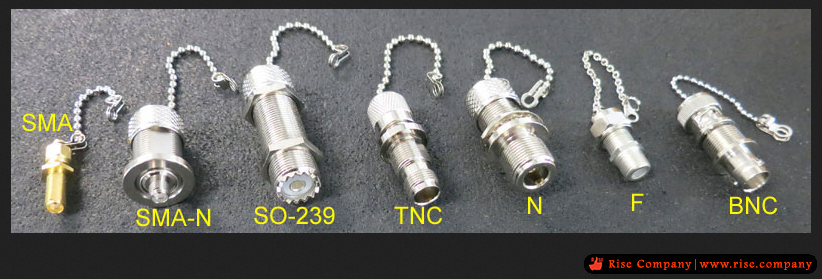
الموصلات المستخدمه في الكيبلات المحوريه - كونكرات- Coax Connector :
"UHF" connector
هذا النوع من اقدام الانواع ويندر استخدامه حالياً ويستخدم في الكيبلات
ذات الممانعه 50 اوم وتردد اقل من 300 ميقا هرتز
N" connectors
هذا النواع من الانواع التي تستخدم حاليا بكثره في مجال اللاسلكيات
ويعمل هذا الموصل حتى تردد 11 قيقا هرتز وطاقه الى 300 واط
"BNC" connctor
هذا النوع ايضا يستخدم في الوقت الحالي ويستخدم في المعامل واللاب التي تحتاج توصيل بشكل سريع وثابت يعمل هذا الموصل حتى تردد 4 قيقا هرتز وطاقه تصل 80 واط
"TNC" connectors
هو نوع مطور من النوع السابق ويعمل هذا النوع حتى تردد 11 قيقا هرتز
ويستخدم في بعض نقاط الوصول اللاسلكية ويعمل على طاقه حتى 100 واط
SMA" connector
هذا النوع من اقدم الانواع فهو متوفر منذ 1960 ومازال ليستخدم حتى هذا الوقت ويعمل هذا الموصل حتى تردد 18 قيقا وطاقه 100 واط , يستخدم في بعض انقاط الوصول
اللاسلكية وبعض كروت الحاسب اللاسلكية
-------------------------------------------------------------
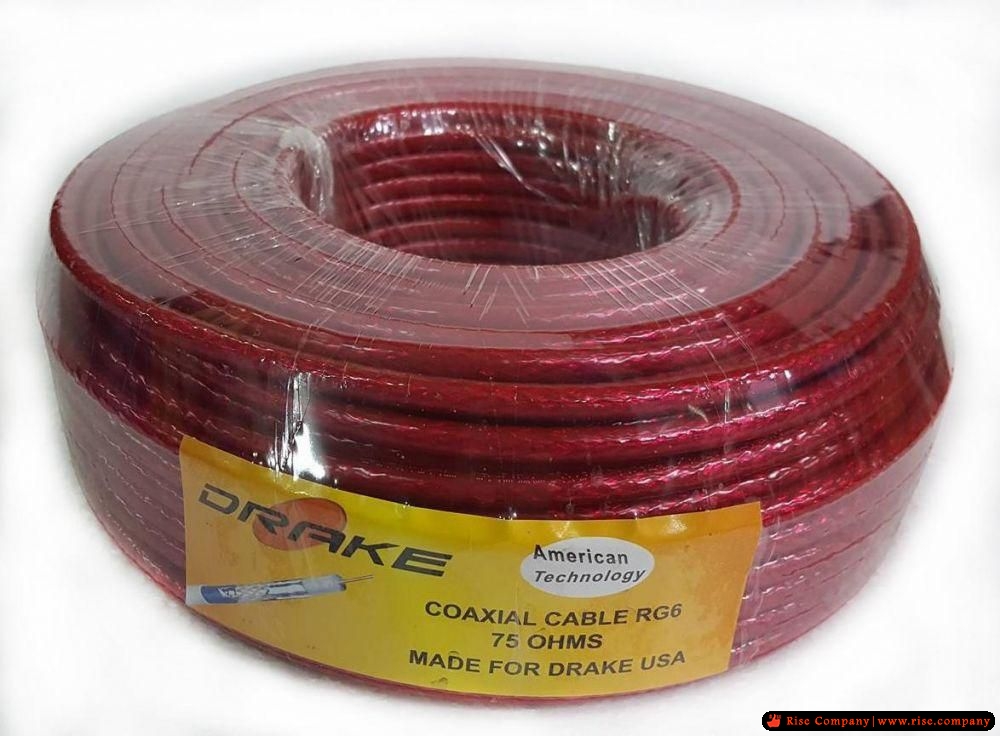
-------------------------------------------------------------ميزة RG-6: مضاد للتقشر; مقاوم للانكماش; مقاوم للتجاعيد
يتحمل الرطوبة والشمس والحر والامطار
أفضل الانواع هوا الامريكى ثم السويدي ثم الاسباني ثم الايطالي
افضل الشركات المصنعة هى دريك Drake
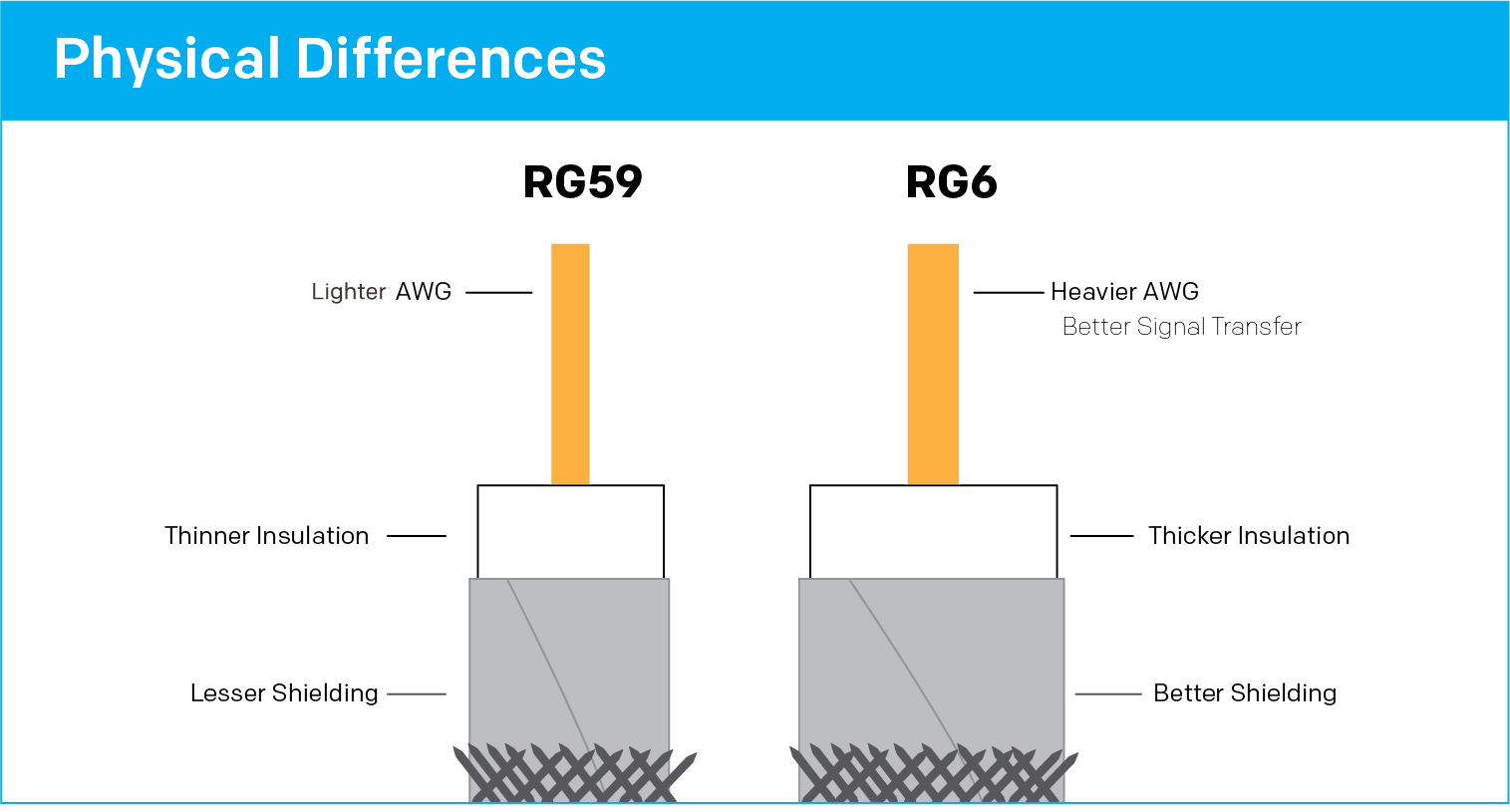
RG6 cable is heavier gauge and has insulation and shielding tuned for high-bandwidth, high-frequency applications such as Internet, Cable TV, and Satellite TV signals. If you aren’t sure which cable to get, then RG6 cable is your best bet.
RG59 cable is thinner and is recommended in low bandwidth and lower frequency applications such as analog video and CCTV installations
Deciding Between RG 6 and RG 59 for your Installation
You may be asking a ton of questions right now regarding what type of Coaxial Cable you should be purchasing. Should you get RG-59 or RG-6? Do you need Quad shielding? What about braiding? Do you need to get Plenum Rated cable? Or Direct Burial? There is a seemingly endless list of options and picking the wrong type of coax could result in spending a lot more money than what you were planning. In this comprehensive article we'll go through a few basics of coaxial cable so you should know what you need.
First, What is RG?
Coaxial cables use RG ratings to distinguish between the different kinds of cables. RG is an old, mostly forgotten military term that stands for “radio guide.” The number distinguishes the different cable specifications, but they are randomly assigned, so don’t look for some type of order in the numbers. Literally dozens of coaxial cables have been made over the years, but the only ones that most people need to worry about are RG 6 cable and RG 59 cable, so those are the two types we are going to focus on here.
RG 6 vs RG 59 Applications
RG 6 is recommended for your CATV, satellite, TV antenna, or broadband internet. RG 59 is generally better for most CCTV systems and other analog video signals. What you really need to consider are the frequency ratings your equipment uses. If your equipment uses higher frequencies (above 50 MHz), then you’ll want to go with RG 6. If your frequencies are lower than that, then you’ll want to use RG 59.
RG 59 (In-Depth)
RG59 cable has been around for a long time. This cable used to be what most people used for their cable TV connection and is very commonly installed in older homes and commercial buildings. However, many modern signal requirements have made this cable less popular in the last few years. RG 59 has a smaller conductor than RG 6, which means that it can’t achieve the same signal quality as RG 6. The way its shielding is designed also means that it doesn’t keep Gigahertz level signals inside the conductor very well. This is why RG 59 probably isn’t a good choice for your TV or internet connection.
The braided shielding in RG 59 was designed around (relatively) long waveforms of megahertz interference. That makes it good for lower frequency signals (anything under about 50 MHz). It is commonly used for composite or component video signals (often in the mini-coax variety). That also makes it a good choice for a closed circuit television (CCTV) video surveillance system. You can even make your installation easier by getting what’s called “Siamese coaxial cable.” This cable consists of a RG 59 cable merged together with a 2C power cable. By using this type of cable, you can run the power and video for your security cameras simultaneously, effectively cutting your install time in half.
RG 6 (In-Depth)
Satellite and internet signals run at higher frequencies than traditional analog video, and when TV broadcasts changed from analog to digital, and cable companies started switching to digital, the higher freuqencies made it necessary to find a more effective coaxial cable. RG6 cable was designed to fulfill these requirements. It has a larger conductor, which gives you much better signal quality. The dielectric insulation was made thicker as well. RG 6 is also made with a different kind of shielding, which allows it to more effectively handle Ghz level signals. While many RG 59 cables uses a foil shield in addition to the braid, RG 6 made it mandatory. The braid was originally in a looser weave (e.g. 60% versus the 90%+ of RG59) but many RG6 cables use a high-percentage braid now too.
Other Factors to Consider When Buying
Deciding between RG 59 and RG 6 is only part of the process. Each class of cable can have different types of shielding or jacket and may or may not be rated for your chosen installation.
RG-6/U
RG-6 can also be found with the designation "RG-6/U," but there is no official designation for the U. Some say that it means "universal" or "for general utility use." Others say that it refers to the type of jacket the cable has, but this isn't always the case. For all intents and purposes RG-6 and RG-6/U are the same. If you need a certain type of jacket, make sure and check the specs. But we'll get into different jacket types later on.
Shielding
Shielding prevents 'noise' from interfering with your signal, and therefore preserves your signal quality. Coaxial cables usually come with two types of shielding: braid and foil. Most coaxial cables include both (although some RG 59 cables still use single shielding). In general, the more shielding you have, the better your cable will perform, especially in longer runs, but there are differences in what the shields protect. Foil shielding typically involves an aluminum or mylar foil bonded to the dielectric, underneath a metal braid. Foil is very effective at protecting against high frequency electromagnetic interference (EMF). Braided shielding is a collection of many small wire strands braided around the outside of dielectric (and/or foil). The braid is effective against lower-frequency interference.
RG 59 cable uses a copper braid and RG 6 can use copper or an aluminum braid.
There are "quad shielded" cables that have an extra layer of foil and braid shielding and can offer better protection. However, newer coaxial cables can use a 95% braid to perform better without the extra bulk and weight of quad shielded cables.
Signal Loss
While shielding techniques keep external signal from affecting our signals, there is always some signal loss over the length of any cable. Here’s the breakdown of signal loss (attenuation) in decibels for 100 ft. of cable. Just remember, the longer your cable runs are, the more signal loss you will experience. That’s why it’s best to keep your installation lengths as short as possible.
RG 59 Signal Loss (in dB) per 100 ft:
Loss at 50 MHz: 2.4 dB
Loss at 100 MHz: 3.4 dB
Loss at 400 MHz: 7.0 dB
Loss at 900 MHz: 11.1 dB
Loss at 1000 MHz: 12.0 dB
RG 6 Signal Loss (in dB) per 100 ft:
Loss at 50 MHz: 1.5 dB
Loss at 100 MHz: 2.0 dB
Loss at 400 MHz: 4.3 dB
Loss at 900 MHz: 6.8 dB
Loss at 1000 MHz: 7.0 dB
Cable Jacket
Plenum Rating
Plenum spaces are the open spaces above the ceiling or below the floor that are used for air circulation. These spaces are important for air circulation in commercial buildings, but they also bring some problems if you ever have a fire because of the high oxygen content and lack of fire barriers. Using untreated cables in plenum spaces can spread the fire to other areas very quickly and spread noxious smoke throughout the building. Plenum cables are coated with flame retardant and made using special plastics that don’t release toxic gasses or smoke nearly as much as other plastics to help prevent this problem. Any cable that you run through plenum spaces must be plenum rated.
>>RG59 for Security Systems: Siamese Cable>>
Outdoor and Direct Burial Coax
If you are running cable outside, it has to have added protection from the weather and the elements. Outdoor cable has been specially designed to resist the elements. They come with a PE (polyethylene) jacket instead or UV treated PVC jacket. The outdoor rated jacket makes this cable extremely resistant to cold weather, moisture, chemicals, abrasion, and cutting.
When you bury a coaxial cable, moisture becomes even more of an obstacle. Without added moisture protection, you risk moisture and contaminants entering into the cable and corroding your shielding and conductor. Direct burial cable has the special PE jacket that outdoor coax has, along with a special gel-like substance in the jacket that blocks water and moisture corroding your conductor and damaging your signal
ملحوظة : هذا الموضوع ما هو الا تقرير ولا تقوم الشركة ببيع المنتج
شاهد ايضا :
أفضل أنواع سلك الدش | سلك 128 شعرة rg 6 | أعلي اشارة | أطول مسافة
مقوي الشبكة Signal Booster الأوم خ© فى الكابلات و التوصيلات 50 Ohm vs. 75 Ohm
+ إنشاء موضوع جديد
النتائج 1 إلى 1 من 1
العرض المتطور
-
09-11-2018, 20:22 #1Status
- Offline

- تاريخ التسجيل
- Apr 2014
- الدولة
- Egypt
- المشاركات
- 4,703
 Engineering and Technology
- معدل تقييم المستوى
- 10
 الفرق بين سلك الدش RG 6 vs RG 59 - سلك دش 96 / 128 / 163 شعرة
------------------------------------------------------------------------
الفرق بين سلك الدش RG 6 vs RG 59 - سلك دش 96 / 128 / 163 شعرة
------------------------------------------------------------------------
شركة رايز للهندسة و التكنولوجيا Rise Company for Engineering & Technology
------------------------------------------------------------------------
Web Hosting | Web Designing | E-Marketing
رقم # 1 فى خدمات الشركات Business Services
استضافة مواقع Web Hosting - عمل ايميل شركة Business Emails
تصميم موقع شركة Web Design - تسويق الكترونى على جوجل Google Adwords
www.rise.company | www.rise.company/emails
ملحوظة : جميع خدماتنا مخصصة للشركات فقط وغير متاحة للافراد
وليس لنا اى منتجات او صيانة نهائيا! يرجى الانتباه الى ذلك.

 رد مع اقتباس
المواضيع المتشابهه
-
تغيير / الغاء نظام فودافون الى النظام العادى نظام 14 قرش من فودافون
بواسطة Rise Company في المنتدى رايز للجوالات Rise Phonesمشاركات: 1آخر مشاركة: 20-12-2019, 23:59 -
الفرق بين حرفي (ى) و (ي)
بواسطة Rise Company في المنتدى رايز للعلوم و المعرفة Rise Knowledgeمشاركات: 0آخر مشاركة: 07-03-2017, 06:55 -
آلام العين, بين الارهاق العادي والاشارات الخطيرة!
بواسطة Rise Company في المنتدى قسم الطب والصحةمشاركات: 0آخر مشاركة: 21-02-2016, 11:02 -
الفرق بين 10/100 و 10/100/1000
بواسطة Rise Company في المنتدى قسم الشبكاتمشاركات: 0آخر مشاركة: 22-07-2015, 08:50 -
الفرق ما بين ال C.V وال Resume
بواسطة Rise Company في المنتدى رايز رواد الأعمال Rise Entrepreneurمشاركات: 0آخر مشاركة: 06-06-2015, 18:19

المفضلات