

التردد فى كابلات النت cat 100 vs 250 vs 500 frequency
هناك 5 سرعات 10-100-1000-10000 - 100000
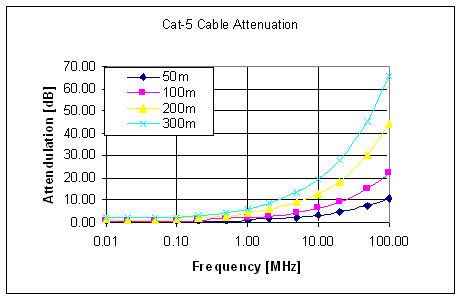
كلما زاد frequency زاد decibel
اى بزيادة التردد يزيد التضخيم أو الكسب الكهربائي و بالتالى تزيد السرعه
و يظهر لدينا اكثر من تصنيف cat بناء على ترددات مختلفة
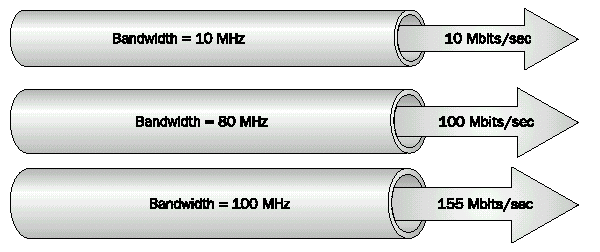
مثال : اذا كنت تريد تدفق معدل كبير من الماء فانت بحاجة الى زيادة قطر الانبوب
مثال اخر : السيارة تنقل 4 راكب على عكس الاوتوبيس ينقل 50 راكب فى النقل الواحد
Frequency range and data rate of communication systems
The relationship between bandwidth and data rate is illustrated in Figure 2. You can think of the cable as a pipe, where bandwidth is the size of the pipe and the data rate is the amount of information you can push through the pipe. An encoding and compression scheme lets you use the pipe more efficiently. ."
What is the relationship between cable frequency and bandwidth?
We are more interested in the number of bits we can successfully fit into a given bandwidth. This would be for transmission of course. What if we put a switch or two into the path?
Frequency of a cable and bandwidth are related based on the needs for the active electronics and transmission. For instance, you can technically run gigabit on 5e (100 MHz) cabling -- although it has to be installed properly and tested out to all the parameters needed. Category 6 is a 250 MHz specification and will support gigabit with no problem. Headroom and margin above that are a bit of a forgiveness factor, but will not help bits move any faster. For 10 Gbit, you need a cable capable of transmitting at 500 MHz or better. So in short, the higher the transmission rate (bandwidth), the higher frequency in cable is required. This also relates to the encoding scheme used, as in PAM 5, PAM 16, etc.
Now, as for your switch question -- it really won't matter. You will have some latency for address translation, etc. but as long as your channel is not over 100 m you will be fine.
Imagine you can only drive two cars, one passenger each, at a given time on a highway in each of the two lanes. Now you would be able to transfer more people over the same highway if you can drive the same two cars 500 trips per day compared to 250 trips per day.
Now imagine the same analogy but replace cars with bits of data. So if you can only drive two bits on a given data-line then 100 Mhz (or 100 million cycles per second) will give more bandwidth (i.e. ability to transfer data over the same line) then 50 Mhz (or 50 Million cycles per second).
The actual speed of data you can pass through a twisted pair would be limited by the frequency characteristics of the twisted wire/cable. The higher the frequency characteristics, it means that the cable can “contain” the electromagnetic fields at higher frequencies allowing higher speed throughputs. (If can be mathematically proved that the higher the data speed, the higher is the created frequency).
+ إنشاء موضوع جديد
النتائج 1 إلى 1 من 1
-
02-07-2017, 02:06 #1Status
- Offline

- تاريخ التسجيل
- Apr 2014
- الدولة
- Egypt
- المشاركات
- 4,703
 Engineering and Technology
- معدل تقييم المستوى
- 10
 التردد فى كابلات الشبكات cat 100 vs 250 vs 500 frequncy
------------------------------------------------------------------------
التردد فى كابلات الشبكات cat 100 vs 250 vs 500 frequncy
------------------------------------------------------------------------
شركة رايز للهندسة و التكنولوجيا Rise Company for Engineering & Technology
------------------------------------------------------------------------
Web Hosting | Web Designing | E-Marketing
رقم # 1 فى خدمات الشركات Business Services
استضافة مواقع Web Hosting - عمل ايميل شركة Business Emails
تصميم موقع شركة Web Design - تسويق الكترونى على جوجل Google Adwords
www.rise.company | www.rise.company/emails
ملحوظة : جميع خدماتنا مخصصة للشركات فقط وغير متاحة للافراد
وليس لنا اى منتجات او صيانة نهائيا! يرجى الانتباه الى ذلك.

 رد مع اقتباس
المواضيع المتشابهه
-
تغيير سلك التليفون بتوصيل كات 5 او 6 Cat - سلك النت vs سلك التليفون
بواسطة Rise Company في المنتدى قسم الشبكاتمشاركات: 0آخر مشاركة: 02-07-2017, 00:27 -
الفرق بين كابلات Cat5, Cat5e, Cat6, Cat6a - النوع و عدد اللفات
بواسطة Rise Company في المنتدى قسم الشبكاتمشاركات: 0آخر مشاركة: 06-06-2017, 04:00 -
إيه اللي يحصل لو عكست كابلات البطارية ...
بواسطة Eng Amr Adel في المنتدى قسم السياراتمشاركات: 0آخر مشاركة: 27-10-2015, 00:24 -
كيفيه تأريج سلك النت (كابل النت) بطريقه سهله وسريعه
بواسطة Eng Amr Adel في المنتدى قسم الشبكاتمشاركات: 0آخر مشاركة: 05-09-2014, 07:10 -
شرح تحويل البريد الإلكتروني إلى تذكرة
بواسطة Eng Amr Adel في المنتدى قسم ادارة الاستضافة Whmcsمشاركات: 0آخر مشاركة: 10-10-2012, 03:21

المفضلات